
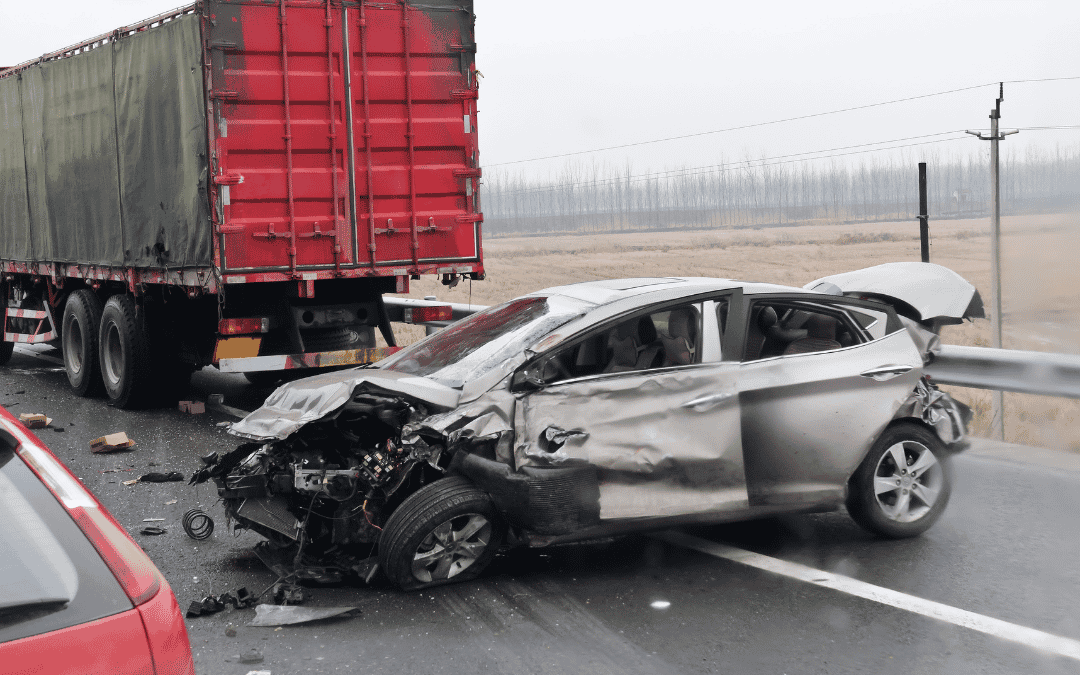
When a commercial truck collides with a passenger vehicle on Chicago’s congested expressways or busy surface streets, the financial devastation often exceeds what victims initially comprehend. Beyond the immediate shock and physical injuries lies a complex web of economic consequences that can destabilize families for years. Emergency room visits quickly escalate into surgical procedures, extended hospital stays, and months of rehabilitation therapy. Meanwhile, paychecks stop arriving, bills accumulate, and insurance adjusters begin minimizing the scope of your losses. Understanding the full spectrum of costs associated with truck accidents is not merely academic; it is essential to securing the financial recovery you deserve. This article breaks down the actual expenses victims face, from emergency medical care and ongoing treatment to wage replacement and long-term disability accommodations. You will learn how settlement values are calculated, what factors insurance companies scrutinize, and why early legal guidance protects your financial future. Whether you are currently navigating a truck accident claim or seeking clarity on what compensation truly covers, the insights here empower you to advocate for full and fair restitution. Reading time: 7 minutes.
Hospital Bills and Emergency Care: The Immediate Financial Impact
The moments following a truck accident often blur into a cascade of sirens, flashing lights, and urgent medical interventions. For victims transported to Chicago-area trauma centers such as Northwestern Memorial Hospital or Advocate Christ Medical Center, the financial clock begins ticking the instant paramedics arrive. Emergency room treatment for truck accident injuries in Illinois typically ranges from $3,000 to $15,000, depending on the severity of impact and the number of diagnostic tests required. Trauma surgery for internal bleeding, fractured bones, or organ damage can easily exceed $50,000 for a single procedure, while intensive care unit stays average $4,000 to $7,000 per day in the Chicago metropolitan region.
Imaging studies form a substantial portion of initial costs. A single CT scan of the head, chest, and abdomen can total $3,500 to $6,000, while MRI scans for spinal injuries or soft-tissue damage range from $1,500 to $4,000 per body region. Victims often require multiple imaging studies over the first 72 hours as physicians monitor internal injuries that may not present immediately. Ambulance transport adds another $1,200 to $2,500, particularly if air medical evacuation is necessary for accidents occurring on rural stretches of Interstate 80 or Interstate 57.
Insurance coverage for these immediate costs varies significantly. If you carry personal injury protection (PIP) or medical payments (MedPay) coverage, your auto policy may cover $5,000 to $25,000 in medical bills regardless of fault. However, Illinois does not mandate PIP coverage, and many drivers carry only liability insurance. Health insurance typically covers emergency treatment after deductibles and co-pays, but you may face substantial out-of-pocket expenses before benefits activate. When the trucking company’s commercial liability policy applies, those carriers often delay payment while investigating fault, leaving victims to navigate medical billing departments and collection notices during the most vulnerable period of recovery.
Ongoing Treatment, Rehabilitation, and Long-Term Care Costs
Once the immediate crisis stabilizes, the long road to recovery reveals a second wave of expenses that often surpasses initial hospital bills. Physical therapy sessions in Chicago typically cost $150 to $350 per visit, and many truck accident victims require two to three sessions weekly for six months or longer. A full course of rehabilitation for spinal injuries, pelvic fractures, or traumatic brain injury can easily reach $30,000 to $80,000 before patients regain functional independence. Pain management specialists charge $300 to $600 per consultation, and interventional procedures such as epidural steroid injections or nerve blocks add $2,000 to $5,000 per treatment cycle.
Victims with permanent disabilities face costs that extend years into the future. Durable medical equipment such as wheelchairs, walkers, and hospital beds ranges from $1,500 for basic models to $15,000 for advanced mobility systems. Home modifications to accommodate wheelchair access or bathroom safety installations average $8,000 to $25,000 for Chicago-area single-family homes. When injuries prevent a return to work, victims lose not only current wages but also employer-sponsored health insurance, forcing many onto COBRA continuation coverage at $600 to $1,200 per month or individual marketplace plans with higher deductibles.
Psychological trauma compounds the financial burden. Post-traumatic stress disorder, depression, and anxiety are common among truck accident survivors, particularly those who witnessed fatalities or suffered disfiguring injuries. Mental health treatment in Illinois costs $120 to $250 per therapy session, and psychiatric medication management adds $200 to $400 per visit. Many patients require weekly therapy for the first year after an accident, then monthly maintenance sessions indefinitely. These ongoing costs rarely appear on insurance adjusters’ initial settlement worksheets, yet they represent very real expenses that victims must budget for throughout their recovery journey.
Lost Wages and Lost Earning Capacity: The Financial Ripple Effect
Medical bills tell only half the story of truck accident costs. The other half lies in the paychecks that never arrive, the promotions that pass by, and the career trajectories permanently altered. For an Illinois worker earning the state median income of approximately $68,000 annually, a three-month recovery period costs $17,000 in gross wages before accounting for lost benefits, vacation accrual, or retirement contributions. Workers in physically demanding trades such as construction, warehousing, or transportation often face longer recovery periods and may never return to their previous roles. A 40-year-old skilled tradesperson who can no longer perform manual labor due to spinal fusion surgery or traumatic brain injury may forfeit $600,000 to $1.2 million in lifetime earnings.
The interaction between workers’ compensation and personal injury claims creates additional complexity for victims injured during work-related driving. If a delivery driver, sales representative, or service technician suffers injuries in a truck accident while performing job duties, Illinois workers’ compensation provides medical coverage and partial wage replacement at approximately two-thirds of average weekly wages, subject to statutory maximums. However, workers’ compensation does not cover pain and suffering or full wage replacement. When a third party such as a negligent truck driver caused the accident, victims may pursue a personal injury claim to recover the difference between workers’ compensation benefits and their full economic and non-economic losses.
Household income disruption extends beyond the injured party. Spouses often reduce work hours or leave employment entirely to provide caregiver support during recovery. Parents exhaust paid time off attending medical appointments and assisting with daily living activities. Self-employed individuals and small business owners face unique challenges, as their absence may result in lost clients, missed contracts, and business failure. These secondary economic impacts rarely appear on standard insurance claim worksheets, yet they represent real financial hardship that settlement negotiations should address. Documenting these losses requires meticulous record-keeping and often expert testimony from vocational rehabilitation specialists and economists who can project future earning capacity based on medical restrictions and labor market conditions.
How Settlement Values Are Calculated: Factors That Determine Your Claim’s Worth
Insurance adjusters and courts in Illinois evaluate truck accident claims using a structured analysis of economic and non-economic damages. Economic damages include all quantifiable financial losses: past medical expenses, future medical care costs projected over the victim’s lifetime, past lost wages, and reduced future earning capacity. These figures can be verified through medical bills, pay stubs, tax returns, and expert economic testimony. Non-economic damages compensate for pain, suffering, emotional distress, loss of enjoyment of life, and permanent disfigurement. While no formula can price human suffering, Illinois courts permit juries to award damages they deem fair and reasonable based on the severity and permanence of injuries.
Liability strength significantly impacts settlement values. When evidence clearly establishes that a truck driver violated federal hours-of-service regulations, failed a post-accident drug test, or was texting while driving, insurers recognize the substantial risk of a large jury verdict and adjust settlement offers accordingly. Conversely, when liability is disputed or the injured party shares fault through speeding or distracted driving, Illinois’s modified comparative negligence rule reduces recovery proportionally. Under this standard, victims who bear less than 50 percent fault may still recover damages, but their award decreases by their percentage of responsibility. A claim valued at $500,000 with 20 percent comparative fault yields a net recovery of $400,000.
Typical settlement ranges for truck accident cases in Illinois vary widely based on injury severity. Soft-tissue injuries with full recovery within three to six months often settle for $15,000 to $75,000. Fractures requiring surgery and extended physical therapy range from $75,000 to $250,000. Severe injuries involving permanent disability, such as spinal cord damage, traumatic brain injury, or amputation, frequently result in settlements or verdicts exceeding $1 million, with some catastrophic cases reaching multiple millions. These ranges assume clear liability and adequate insurance coverage. Commercial trucks typically carry $750,000 to $1 million in liability coverage, though hazardous materials haulers and interstate carriers often maintain $5 million or higher limits. Understanding the available insurance coverage early in the claims process helps set realistic expectations and guides settlement strategy.
Taking Action: Why Legal Help Matters in Truck Accident Claims
The hours and days following a truck accident present critical opportunities that, if missed, can permanently diminish the value of your claim. Insurance adjusters often contact victims while still hospitalized, offering quick settlements that sound generous in the moment but represent a fraction of true costs. Accepting these early offers typically requires signing a release that bars any future claims, even if complications arise or injuries prove more severe than initially diagnosed. Before agreeing to any settlement or providing a recorded statement to an insurance company, consulting with a personal injury attorney protects your rights and ensures you understand the full scope of compensation available under Illinois law.
An experienced attorney immediately begins preserving evidence that might otherwise disappear. Commercial trucking companies must retain electronic logging device data, driver qualification files, maintenance records, and black box information for limited periods, and aggressive legal action often is necessary to secure this evidence before it is destroyed. Attorneys also engage accident reconstruction experts, obtain surveillance footage from nearby businesses, and interview witnesses while memories remain fresh. This investigative work builds the foundation for demonstrating liability and countering the trucking company’s inevitable attempts to shift blame.
Equally important is the attorney’s role in accurately valuing your claim. We work with medical experts to document the full extent of your injuries, life care planners to project future treatment needs, vocational experts to calculate lost earning capacity, and economists to present these figures in terms that resonate with insurance adjusters and juries. We understand the tactics insurers use to minimize payouts and have the negotiation experience to push back effectively. When settlement negotiations stall, we are prepared to file suit and take your case to trial, a willingness that often motivates insurers to make fair offers.
If you or a family member has been injured in a truck accident, time is a factor you cannot afford to waste. Illinois law imposes a two-year statute of limitations on most personal injury claims, and waiting too long can bar your claim entirely. Our team offers free case reviews to assess your situation, explain your options, and answer your questions with no obligation. We handle truck accident cases on a contingency fee basis, meaning you pay no attorney fees unless we recover compensation on your behalf. Contact us today to take the first step toward securing the financial recovery you deserve and holding negligent parties accountable.